What is Throne (THN) Crypto Coin? NFT Marketplace & Metaverse Token Explained
You might have seen the ticker THN pop up on a chart or heard whispers about it in Web3 circles. But what exactly is Throne? Is it just another NFT project chasing trends, or does it offer something distinct in the crowded digital art space? The short answer is that Throne is more than a simple token; it is an ecosystem bridging single-edition digital art with a decentralized metaverse governed by its community.
If you are looking to understand where your money goes when you buy THN, you need to look beyond the price action. You need to understand the infrastructure. Throne operates across two major blockchains-Ethereum and Solana-and uses the THN token as the fuel for everything from buying virtual land to voting on how a digital city should be built. Let’s break down how this works, why the dual-chain approach matters, and what risks come with holding a low-cap asset like this.
The Core Concept: Art Meets Governance
At its heart, Throne is built around Throne Market, which is an NFT marketplace specialized in unique, single-edition digital artworks. Unlike generic marketplaces that flood users with thousands of identical copies of the same image, Throne focuses on exclusivity. Think of it less like a print shop and more like a gallery for one-of-a-kind pieces.
The team behind Throne Labs, registered in Singapore, includes professionals from both the blockchain engineering world and traditional creative industries like music and fine art. This mix is intentional. They aim to create "extraordinary experiences" for creators and collectors, blending audio, visual art, and technology into a cohesive ecosystem. When you hold THN, you aren't just holding a speculative asset; you are holding a key to this creative economy.
However, the project didn't stop at selling JPEGs. Throne expanded its vision to include a metaverse component. Here, the THN token shifts from being just a payment method for art to becoming a tool for civic participation. This transition marks a significant shift in utility, moving from passive collecting to active governance.
Dual-Chain Architecture: Ethereum vs. Solana
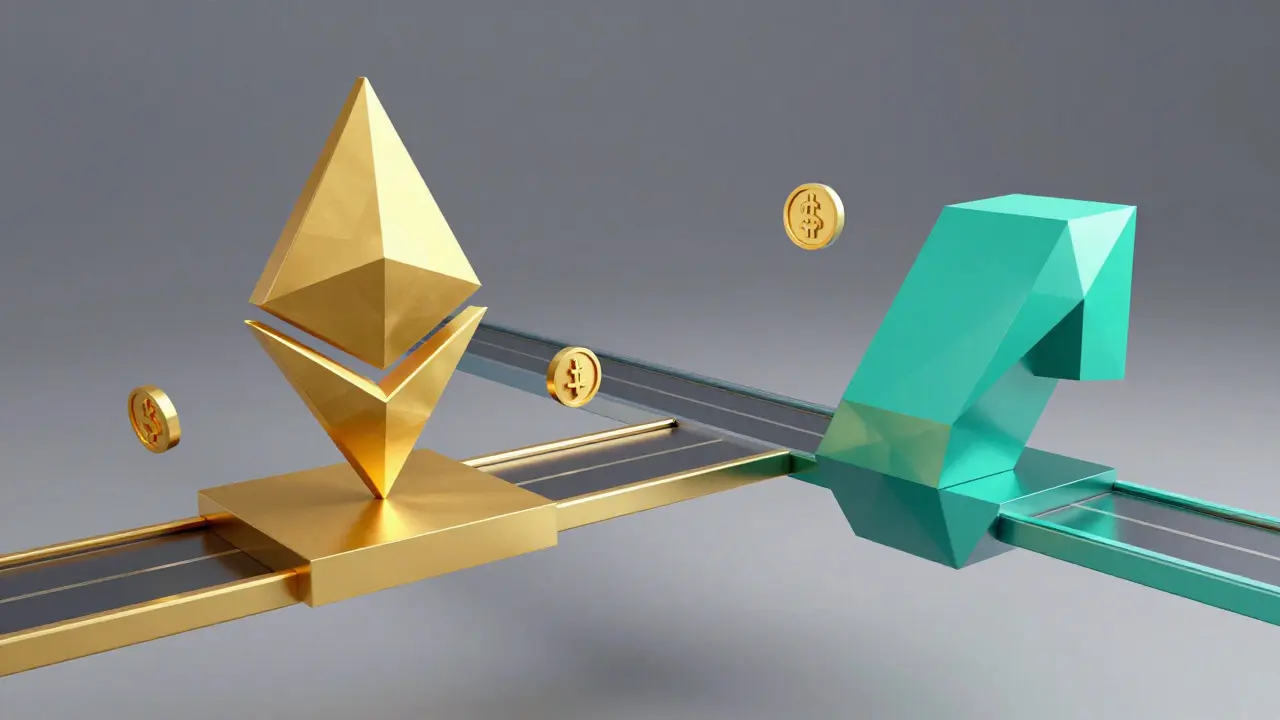
One of the most technical yet critical aspects of Throne is its multi-chain presence. Many projects stick to one network, but Throne has deployed its smart contracts on both Ethereum and Solana. This isn't random; each chain serves a specific purpose within the Throne ecosystem.
| Blockchain | Token Standard | Primary Use Case | Key Advantage |
|---|---|---|---|
| Ethereum | ERC-20 | Purchasing land and high-value NFTs | High security, established liquidity |
| Solana | SPL Token | Governance voting and daily payments | Low fees, fast transaction speeds |
On Ethereum, the ERC-20 version of THN (contract address: 0x2e95cea14dd384429eb3c4331b776c4cfbb6fcd9) handles the heavy lifting for valuable assets. If you are buying a prime plot of virtual real estate or a rare digital masterpiece, this is likely where the transaction occurs. Ethereum’s proof-of-stake consensus provides a robust security layer, which is crucial for high-value transfers.
Conversely, the Solana-based THN variant focuses on efficiency. Governance requires frequent voting, and micro-transactions for everyday platform features need to be cheap and fast. Solana’s high throughput makes it ideal for these activities. By splitting functions, Throne attempts to balance the security of Ethereum with the usability of Solana. However, this also means users must manage wallets and bridge assets between two different networks, adding a layer of complexity to the user experience.
The Metaverse and DAO Governance
This is where Throne differentiates itself from standard NFT platforms. The project aims to build a city-like metaverse where participants don’t just play games-they help plan the city. Through a Decentralized Autonomous Organization (DAO), THN holders can vote on urban planning decisions.
Imagine deciding where a new virtual concert hall should be built or how public spaces in the metaverse are designed. That power lies with the token holders. This model aligns with the broader Web3 ethos of decentralized ownership. Instead of a central company dictating every change, the community co-governs the environment. For THN holders on the Solana chain, this means their tokens act as ballots. The more THN you hold, the more influence you generally have over the direction of the virtual city.
This governance structure transforms THN from a mere currency into a stake in the future development of the platform. It creates a feedback loop: if the metaverse becomes popular and valuable, the demand for governance rights (and thus THN) may increase. If the project stagnates, the token loses its utility value alongside its speculative price.
Market Performance and Financial Reality
Let’s talk numbers, because understanding the financial profile of THN is essential for any investor. As of early 2025, data from aggregators like Coinbase showed a circulating supply of approximately 390 million THN. The market capitalization hovered around $431,000 USD, with a unit price near $0.0011.
To put that in perspective, this classifies THN as a micro-cap or small-cap cryptocurrency. It is not competing with giants like Bitcoin or even major NFT tokens like ApeCoin in terms of total market value. This status comes with inherent volatility. Prices can swing dramatically based on relatively small trading volumes. For instance, reports indicated a drop to roughly $0.000258 later in 2025, highlighting the sharp downward pressure possible in such illiquid markets.
Trading volume was reported at around $38,900 over a 24-hour period in April 2025. While this shows activity, it is modest compared to top-tier assets. Low liquidity means that large buy or sell orders can significantly impact the price, leading to slippage. If you are considering entering this market, you need to be prepared for high risk and potential instability. There are no guarantees of growth, and the lack of widespread adoption metrics suggests the project remains in a niche phase.

Risks and Considerations for Investors
Before you rush to buy THN, consider the hurdles. First, there is the complexity of the multi-chain setup. Managing assets across Ethereum and Solana requires a good grasp of wallet management and bridging protocols. Mistakes here can lead to lost funds, especially if you send ETH-based THN to a Solana address or vice versa.
Second, the regulatory landscape for utility tokens and NFTs remains unclear in many jurisdictions. While Throne positions THN as a utility token for access and governance, regulators could view it differently depending on local laws. Always check the compliance status in your region.
Third, the project’s success depends heavily on execution. Building a functional metaverse and maintaining an active artist community is difficult. The lack of detailed public performance metrics-such as daily active users or total sales volume on Throne Market-makes it hard to gauge true traction. Most available data focuses on the token price rather than platform health.
How to Get Started with THN
If you decide to proceed, the process is similar to acquiring other ERC-20 or SPL tokens. You will need a compatible wallet. For Ethereum, MetaMask is a standard choice. For Solana, Phantom or Solflare works well. Once your wallet is set up, you can purchase THN on supported centralized exchanges or decentralized venues. Always verify the contract addresses before interacting with any token to avoid scams. Double-check that you are using the correct network for your intended purpose-buying art versus voting in the DAO.
Is Throne (THN) a good investment?
Throne is a high-risk, high-reward asset due to its small market cap and niche focus. It is suitable only for investors who understand the metaverse and NFT sectors and can tolerate significant volatility. It is not recommended for conservative portfolios.
Which blockchain is better for holding THN?
It depends on your goal. Use the Ethereum version for purchasing high-value NFTs and land due to higher security. Use the Solana version for participating in DAO governance and making smaller, frequent transactions due to lower fees.
What is the maximum supply of THN?
As of recent data, the circulating supply is approximately 390 million THN. Specific details on a hard cap or inflationary mechanisms were not explicitly detailed in primary aggregator sources, so checking the latest official documentation is advised.
Can I earn THN by creating art?
Yes, Throne Market rewards creators. Artists can mint single-edition artworks and sell them on the platform, receiving THN or other cryptocurrencies as payment, depending on the listing settings.
Is Throne secure?
The underlying blockchains (Ethereum and Solana) are highly secure. However, security also depends on the smart contracts developed by Throne Labs. Users should always use reputable wallets and verify contract addresses to mitigate personal risk.