Koopal Dex Review: Is It Real or a Scam? (2026 Warning)
You’ve probably seen the name Koopal Dex pop up somewhere online. Maybe it was in a social media ad promising insane returns, or perhaps a friend sent you a link claiming it’s the next big thing in decentralized finance. You click through, expecting to find a sleek new platform where you can swap tokens without handing over your identity. But instead of finding clear information about fees, security audits, or supported blockchains, you hit a wall. Or worse, you see vague promises that sound too good to be true.
Here is the hard truth based on exhaustive research as of May 2026: Koopal Dex does not exist as a legitimate, recognized decentralized exchange. There are no credible reviews from major industry publications like 99Bitcoins, CoinGape, or Koinly. There is no verified smart contract audit. There is no track record of liquidity. In the world of cryptocurrency, silence from authoritative sources isn’t just an oversight-it’s a massive red flag.
This isn’t just about one missing website. It’s about understanding how scammers operate in the DeFi space and knowing which platforms actually hold your money safely. If you are looking for a place to trade crypto without a central authority controlling your funds, you need to know who the real players are and how to spot the fakes before you lose your savings.
The Red Flags: Why Koopal Dex Should Raise Alarms
When a platform claims to be a decentralized exchange (DEX), it operates on specific technical principles. Legitimate DEXs rely on smart contracts that are transparent and immutable. This means anyone can inspect the code to see how trades are executed. For a platform to gain traction, it needs liquidity-real money locked in pools so traders can buy and sell instantly.
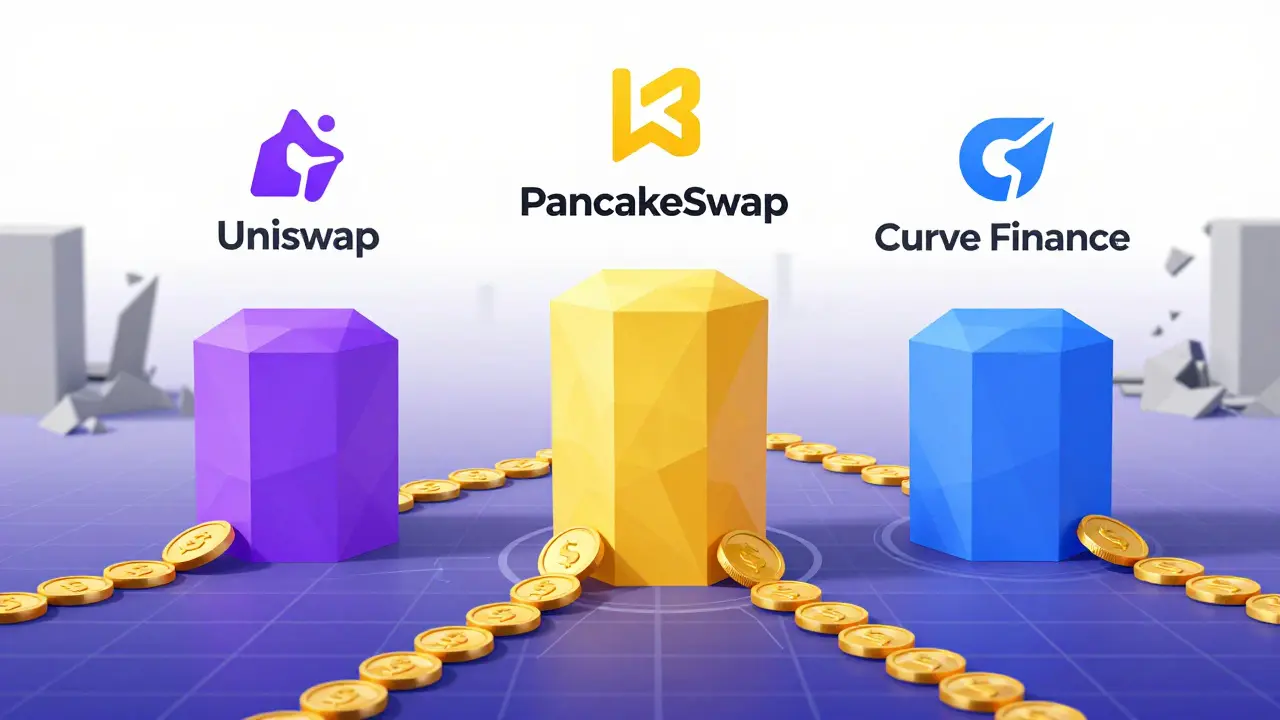
If Koopal Dex were real, we would expect to see data points like Total Value Locked (TVL). Major DEXs publish this data openly. For example, Uniswap, the leader in the Ethereum ecosystem, holds over $4 billion in TVL. PancakeSwap on the BNB Chain holds over $2 billion. Even niche platforms usually have some verifiable metric.
Koopal Dex has none of this. The absence of any mention in comprehensive 2025 and early 2026 reviews from trusted outlets suggests one of three scenarios:
- It is a scam site: A phishing page designed to steal your private keys or seed phrase when you connect your wallet.
- It is a misspelling: Users often confuse names. Did you mean KuCoin? Note that KuCoin is a centralized exchange (CEX), not a DEX, and requires KYC (Know Your Customer) verification.
- It is a dead project: A platform that launched briefly, failed to attract liquidity, and shut down, leaving users with worthless tokens.
- Check the Smart Contract Audit: Legitimate DEXs hire third-party firms like CertiK, OpenZeppelin, or Trail of Bits to audit their code. If a site doesn’t link to an audit report, assume the code could contain backdoors that allow developers to drain user funds.
- Verify Liquidity Sources: Real DEXs aggregate liquidity from multiple sources or have deep pools provided by professional market makers. If you try to swap a small amount and the price slippage is huge (e.g., losing 10% of your value in a single trade), the liquidity is fake or manipulated.
- Look for Community Presence: Genuine projects have active communities on Discord, Telegram, and Twitter. However, be careful-scammers also use these channels. Look for organic discussion, not just bots posting "To the moon!"
- Confirm Wallet Compatibility: Safe DEXs integrate with standard wallets like MetaMask, Trust Wallet, or Phantom. If a site asks you to download a special browser extension or enter your seed phrase directly into a web form, close the tab immediately.
- Use a Hardware Wallet: Connect your Ledger or Trezor to DEXs. This keeps your private keys offline, protecting them from malware on your computer.
- Revoke Unused Permissions: Over time, you may approve many tokens for spending. Use tools like Revoke.cash to check and revoke permissions for contracts you no longer use.
- Start Small: When trying a new feature or a less-known pool, start with a small amount. Test the withdrawal process to ensure you can get your funds out.
- Verify URLs: Bookmark the official websites of major DEXs. Typosquatting domains (e.g., uniswapp.com) are common phishing traps.
- Check Token Contracts: Before buying a new token, paste its contract address into a scanner like Etherscan or BscScan. Check if the contract is verified and if the top holders are not concentrated in a few wallets.
In any of these cases, interacting with "Koopal Dex" carries extreme risk. Scammers in the DeFi space often create fake interfaces that look identical to popular exchanges. They might even list a fake token called "KOOPAL" that you can buy but never sell. Always verify the URL and the contract address before connecting your wallet.
How to Spot a Fake Decentralized Exchange
Not every unknown platform is a scam, but most are. To protect yourself, you need to know what a legitimate DEX looks like under the hood. Here are the critical checks you should perform before trading on any new platform.
A key feature of legitimate DEXs is that they are non-custodial. This means you retain control of your assets at all times. When you trade on a real DEX, your tokens move directly from your wallet to the counterparty’s wallet via the blockchain. No middleman holds your funds. This eliminates the counterparty risk that led to disasters like the FTX bankruptcy, where users lost access to billions in assets because the exchange was holding them centrally.
The Real Leaders: Trusted DEX Alternatives for 2026
Instead of risking your capital on an unverified platform like Koopal Dex, consider using established exchanges that have survived market cycles and proven their security. These platforms dominate the market for a reason: they offer deep liquidity, low fees, and robust security features.
| Platform | Primary Blockchain | Key Feature | Typical Fee Structure | Best For |
|---|---|---|---|---|
| Uniswap | Ethereum, Polygon, Arbitrum | Highest liquidity, widest token selection | 0.05% - 0.3% per trade | Traders seeking maximum asset variety |
| PancakeSwap | BNB Chain (BSC) | Low fees, yield farming, NFT marketplace | 0.25% per trade | Users wanting low-cost transactions and staking rewards |
| Curve Finance | Ethereum, Polygon, Arbitrum | Optimized for stablecoin swaps | Often below 0.04% | Swapping between USDT, USDC, DAI with minimal slippage |
| dYdX | StarkNet, Cosmos | Advanced derivatives and margin trading | Maker/Taker fee model | Professional traders using leverage |
| Osmosis | Cosmos SDK | Cross-chain swapping within the Cosmos ecosystem | Variable based on pool | Users invested in Cosmos-based tokens |
Each of these platforms serves a different purpose. If you are trading large volumes of stablecoins, Curve is likely your best bet due to its specialized algorithm that minimizes impermanent loss and slippage. If you want to experiment with new tokens on Ethereum, Uniswap V3 offers concentrated liquidity positions that maximize capital efficiency. For those on the BNB Chain looking for passive income, PancakeSwap’s dual-mining and lottery features provide additional utility beyond simple swapping.
Notice that none of these platforms require you to give up custody of your funds. You connect your wallet, approve the transaction, and sign the swap. The process is transparent, and you can track every step on the blockchain explorer. This transparency is the core promise of DeFi, and it is something you cannot verify with obscure platforms like Koopal Dex.
Understanding the Risks of Obscure Platforms
Why do scams like Koopal Dex exist? The answer lies in the permissionless nature of blockchain technology. Anyone can deploy a smart contract and create a website. This democratization allows for innovation, but it also lowers the barrier to entry for bad actors.
One common tactic is the "honeypot" scam. The attacker creates a token that appears to be tradable. You can buy it, and the price goes up, attracting more buyers. However, the smart contract contains hidden code that prevents selling. When you try to exit, the transaction fails. By then, the attacker has sold all their holdings, leaving you with worthless digital receipts.
Another risk is the rug pull. Developers launch a DEX or a liquidity pool, attract initial funding, and then withdraw all the liquidity, crashing the token price to zero. Without proper audits and locked liquidity (where LP tokens are burned or time-locked), there is nothing stopping developers from stealing the pool.
Legitimate exchanges mitigate these risks through governance tokens and community oversight. For instance, Uniswap is governed by UNI token holders who vote on protocol upgrades. This decentralization ensures that no single entity can unilaterally change the rules to favor themselves. If a platform lacks a clear governance structure or anonymous team with no reputation, proceed with extreme caution.
Practical Steps to Secure Your DeFi Trading
To trade safely in 2026, adopt a security-first mindset. Treat your crypto wallet like a bank account, but remember that there is no customer service line to call if things go wrong.
Remember, the convenience of a DEX comes with responsibility. You are your own bank. If you lose your seed phrase, your funds are gone forever. If you interact with a malicious contract, your funds are drained. Education is your best defense.
Conclusion: Stick to the Proven Path
The search for "Koopal Dex" leads nowhere because it shouldn’t lead anywhere. In the fast-moving world of crypto, novelty often masks danger. The platforms that matter are the ones that have built trust over years, not days. Uniswap, PancakeSwap, Curve, and others have stood the test of time, offering secure, transparent, and efficient trading experiences.
Don’t let FOMO (Fear Of Missing Out) drive you toward unverified platforms. The potential gains from a shady DEX are never worth the risk of total loss. Stick to the major players, use hardware wallets, and always verify the source. Your financial security depends on it.
Is Koopal Dex a legitimate crypto exchange?
No. As of May 2026, there is no verifiable evidence that Koopal Dex is a legitimate or operational decentralized exchange. It is absent from all major industry reviews, security audits, and liquidity trackers. It is highly likely to be a scam or a defunct project.
What are the safest DEXs to use in 2026?
The safest decentralized exchanges include Uniswap (for Ethereum and Layer 2s), PancakeSwap (for BNB Chain), Curve Finance (for stablecoins), and dYdX (for derivatives). These platforms have high liquidity, audited smart contracts, and large user bases.
How can I tell if a DEX is a scam?
Red flags include lack of smart contract audits, anonymous teams with no history, inability to sell tokens (honeypots), extremely high slippage, and requests for your seed phrase. Always check independent reviews and liquidity data before trading.
Do decentralized exchanges require KYC?
Generally, no. One of the main benefits of DEXs like Uniswap and PancakeSwap is that they are non-custodial and do not require Know Your Customer (KYC) verification. You only need a crypto wallet to connect and trade. However, some newer regulated DEXs may begin implementing optional KYC for fiat on-ramps.
What is the difference between a CEX and a DEX?
A Centralized Exchange (CEX) like Binance or Coinbase holds your funds and acts as an intermediary. A Decentralized Exchange (DEX) allows peer-to-peer trading via smart contracts, meaning you retain control of your assets in your personal wallet at all times.