Crypto Compliance: Everything You Need to Stay Legal
When working with Crypto Compliance, the framework of laws, guidelines, and tech tools that make sure crypto activities meet legal standards. Also known as crypto regulatory compliance, it covers everything from identity verification to anti‑money‑laundering checks.
Key Topics in Crypto Compliance
One of the first pieces of the puzzle is Crypto Regulation, the set of rules issued by governments and financial authorities that dictate what you can and cannot do with digital assets. Different jurisdictions treat crypto differently – some ban it outright, others tax it like property, and a few create sandboxes for innovation. Understanding the local regulatory climate helps you avoid costly penalties and choose the right markets for expansion.
Another must‑watch area is Cryptocurrency Tax, the fiscal obligations that arise when you buy, sell, earn or stake digital coins. Tax rates vary widely: countries such as Germany may tax long‑term holdings at zero, while others like France levy up to 30% on gains. Knowing the rate table for each country lets you plan trades, claim deductions, and file accurate returns without a nightmare audit.
Compliance doesn’t stop at paperwork. Blockchain Forensics, the investigative techniques that trace crypto flows across wallets and exchanges, is now a core tool for governments and firms. By analyzing transaction graphs, forensic platforms can spot sanction‑evasion, money‑laundering, and illicit funding. For businesses, adopting these tools means you can flag risky transfers before they hit your system and stay ahead of regulators.
Finally, Crypto Exchange Compliance, the set of standards exchanges must meet to operate legally, including KYC, AML, and reporting obligations, determines which platforms you can trust. Exchanges that fail to meet these standards expose users to hacks, loss of funds, and regulatory action. Evaluating security measures, fee structures, and compliance certifications helps you pick a safe venue for trading.
All these pieces – regulation, tax, forensics, and exchange standards – are tightly linked. Crypto compliance requires a holistic view: you need to understand the law, calculate the tax impact, monitor transaction health, and choose compliant service providers. In the collection below you’ll find deep dives into country‑specific bans, tax tables for 2025, reviews of exchanges like CRXzone, and even how North Korea exploits mixing services. Use these resources to build a compliance checklist that works for your wallet, your business, or your client base.

BiONE Crypto Exchange Review: What Happened and Why It’s Gone
BiONE crypto exchange claimed strong security and regulatory compliance but vanished in 2025. Now dead, unresponsive, and labeled a scam by multiple sources, it serves as a warning to all crypto traders about unverified platforms.
Read More
How Moroccans Use Crypto for International Payments Despite the Ban
Despite a 2017 ban, Moroccans use cryptocurrency to send money abroad faster and cheaper than banks. Underground networks thrive, while the central bank quietly prepares to regulate digital assets.
Read More
Stablecoin Regulations: MiCA vs US Federal Framework Compared
MiCA and the US stablecoin framework set radically different rules for digital dollars. One bans risky models; the other bets on Treasury demand. Here's how they compare-and what it means for your crypto holdings.
Read More
How to Buy Crypto for Fiat in Russia: 2025 Guide for RUB Transactions
Learn how to buy crypto with rubles in Russia in 2026 using P2P trading, instant card purchases, and bank transfers. Avoid scams, understand KYC rules, and pick the safest platforms.
Read More
How to Buy Cryptocurrency with RUB in Russia: 2026 Step-by-Step Guide
Learn how to safely buy cryptocurrency with Russian rubles in 2026. This guide covers step-by-step methods, platform comparisons, safety tips, and common pitfalls. Over 18 million Russians now own crypto, but navigating regulations is key.
Read More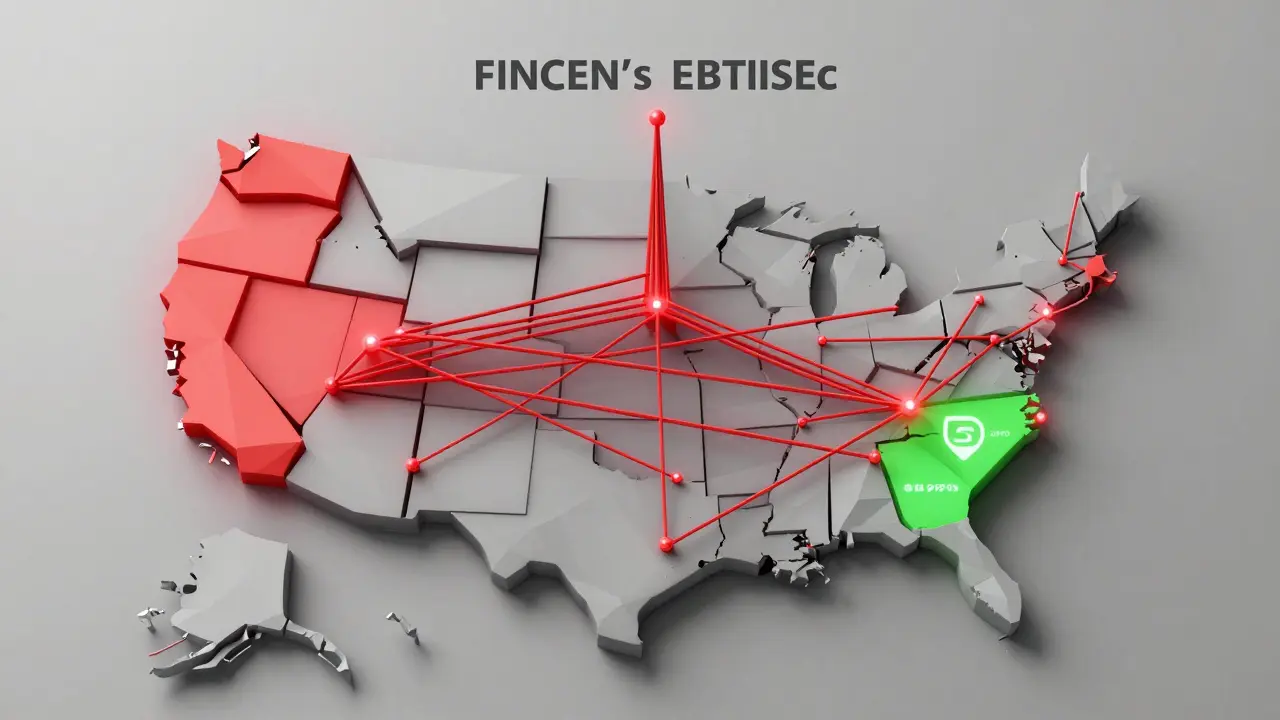
Licensing Requirements for Crypto Businesses in the U.S. in 2026
Crypto businesses in the U.S. must navigate federal MSB registration and 50+ state licenses. New York's BitLicense is the strictest, costing up to $2 million to obtain. Compliance isn't optional - it's the cost of doing business.
Read More
Severe Penalties for Crypto Non-Compliance in Thailand: What You Need to Know in 2026
Thailand enforces some of the world's strictest crypto rules in 2026, with prison time, platform blocks, and unlimited liability for non-compliance. Know the penalties, the licensed platforms, and how to stay safe.
Read More
Can Businesses in China Accept Crypto Legally in 2026?
As of 2026, businesses in mainland China face a total legal ban on accepting cryptocurrency. Any attempt to do so is a criminal offense, with severe penalties including fines, asset seizures, and jail time. The only legal digital payment option is the state-backed digital yuan.
Read More
EU Travel Rule Compliance for Crypto: What Zero Threshold Means for Your Transactions
The EU's zero-threshold Travel Rule now requires full identity data for every crypto transaction, no matter the size. Here's how it affects users, exchanges, and cross-border transfers as of 2026.
Read More
How Indian Crypto Traders Moved to Dubai to Avoid 30% Tax
Indian crypto traders are relocating to Dubai to escape India's 30% crypto tax. With zero personal income tax, clear regulations, and easy business setup, Dubai has become the top destination for tax-efficient crypto trading.
Read More
How to Avoid Crypto Restrictions in Russia: Legal Workarounds and Risks in 2026
Russia bans retail crypto use but allows state-approved crypto for international trade. Learn how ordinary Russians bypass restrictions legally in 2026 - and why the digital ruble is the real threat.
Read More
Are Crypto Payments Allowed in Nigeria? The 2026 Legal Reality
As of 2026, crypto payments are legal in Nigeria under strict SEC regulations. Licensed exchanges can operate, banks can support them, and taxes apply to profits. Here's what you need to know to stay compliant.
Read MoreLatest Post
-

How Blockchain Ensures Transparent Charity Donations 3 October 2025
-

-

KIM WKIM Mjolnir Airdrop: What’s Real and What’s Not in 2025 5 November 2025
-

-